
Before you pack a parcel for an overseas friend, customer, or family member, one question is worth asking first: can this item actually be sent? Every year, thousands of parcels are held, returned, or seized because they contained something that cannot be couriered from India, or cannot enter the destination country.
This guide explains which items are prohibited, which are restricted and need special permission, and how to check before you ship, so you avoid fines, delays, and lost money.
Prohibited vs Restricted: What Is the Difference?
It helps to understand two categories.
- Prohibited items cannot be sent at all, by any courier, under any circumstances.
- Restricted items can be sent only with special permits, certificates, packaging, or in limited quantities, and only to certain destinations.
There are two layers of rules to check: Indian export rules and the import rules of the destination country. An item may be legal to export from India but banned at the other end, so both matter.
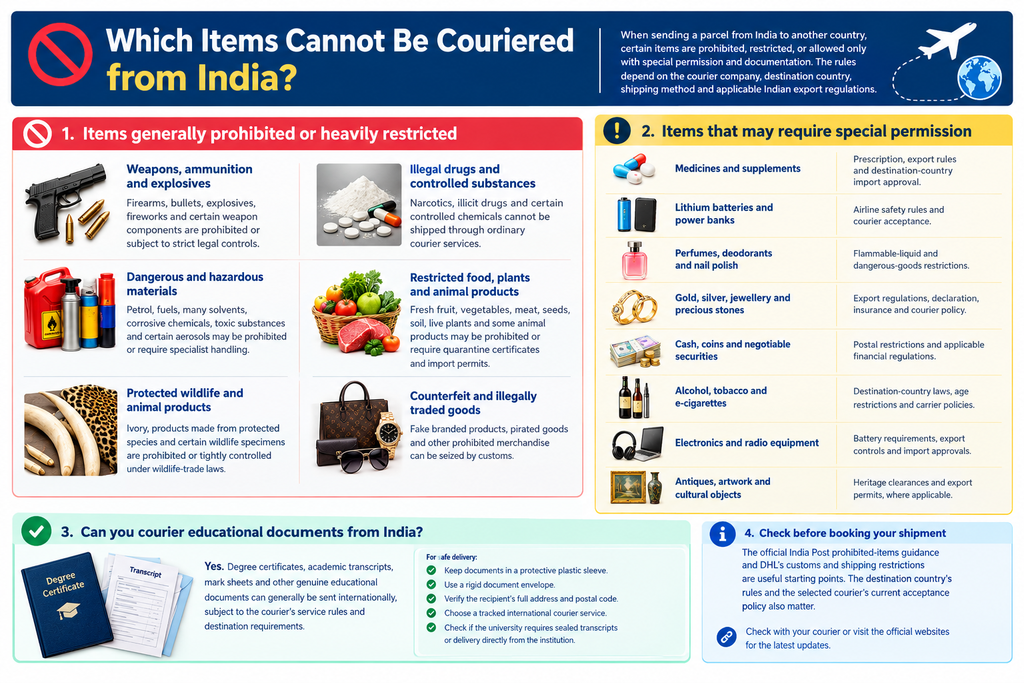
Items Prohibited From Courier Shipping
These categories are banned by almost every courier and customs authority.
- Illegal drugs and narcotics: Including psychotropic substances and anything containing them
- Weapons and ammunition: Firearms, parts, knives in some cases, and imitation weapons
- Explosives and fireworks: Including crackers, flares, and flammable ignition materials
- Counterfeit goods: Fake currency, fake branded products, and pirated media
- Cash and negotiable instruments: Currency notes, coins, and bearer cheques are generally not accepted
- Human remains and ashes: Usually require special handling, not standard courier
- Obscene or illegal material: Pornographic and other unlawful content
- Live animals: Including insects, reptiles, and birds
- Items that endanger people or aircraft: Hazardous and dangerous goods
Items That Are Restricted or Need Special Permission
These items are often allowed only with paperwork or under conditions.
Food, Spices, and Perishables
Many food products can be sent, but rules are strict. Fresh fruit, vegetables, meat, dairy, and anything that can spoil are usually refused. Packaged, dry foods and some spices may be allowed with ingredient labels, but many countries limit or ban certain items. Always check the destination’s food import rules.
Medicines and Supplements
Medicines are heavily regulated. Prescription medicines, controlled drugs, and some herbal or Ayurvedic products may need a doctor’s prescription, licence, or import permit, and many are prohibited in certain countries.
Plants, Seeds, and Wood Products
These usually need a phytosanitary certificate, and many countries ban them to protect local agriculture. Some timber and sandalwood products are also regulated.
Wildlife and Animal Products
Ivory, animal skins, shells, and products from protected species are banned or controlled under wildlife protection laws. Certain leather and fur goods need documentation.
Lithium Batteries and Electronics
Power banks, phones, laptops, and loose batteries carry fire risk. Many services restrict them, and those that accept them demand special packaging and declarations.
Liquids, Perfumes, and Aerosols
Liquids can leak, and perfumes, sprays, nail polish, and similar products are flammable, so they often face limits on quantity and packaging, or are not accepted on air services.
Alcohol and Tobacco
Alcohol and tobacco products are tightly controlled, taxed heavily, and banned in many countries. E-cigarettes and vaping products are prohibited in India and many destinations.
Jewellery, Gold, and Valuables
Precious metals and expensive jewellery are often restricted, may need special declarations, and carriers limit their liability on them. Check requirements before shipping.
Antiques and Cultural Items
Certain antiques and objects of cultural or historical value cannot be exported from India without permission from the relevant authority.
Branded and Copied Goods
Goods that copy a protected brand or design can be seized at the destination, even if the sender did not intend any harm.
Items Many Couriers Will Not Accept
Even when an item is legal, carriers may decline it for safety or practical reasons. These typically include:
- Perishable and temperature-sensitive goods
- Compressed gas and flammable liquids
- Very fragile or irregular items that cannot be packed safely
- Valuables above the carrier’s declared value limits
- Items with no proper documentation
Why Do Rules Differ by Country?
Each country protects its own health, agriculture, economy, and security. A product that is normal in one country, such as a certain medicine or food, may be banned elsewhere. This is why the destination matters as much as India’s own rules, and why you should never assume that an item allowed to one country is allowed everywhere.
What Happens If You Ship a Prohibited Item?
The consequences can include:
- The parcel being held, returned, or destroyed
- Fines and penalties for the sender
- Legal action in serious cases
- Lost shipping fees and delays for the receiver
Never hide or mislabel an item to get it through. Wrong declarations are treated as a serious violation.
How to Check Whether Your Item Can Be Sent
- Identify the item and its HS code.
- Check India’s export rules for that product.
- Check the destination country’s import rules and any quantity limits.
- Find out whether permits or certificates are needed.
- Ask your courier before you pack, not after.
How Speed International Courier Can Help
Speed International Courier, based in Bhikhiwind, Punjab, helps individuals, students, families, and businesses ship documents, parcels, and cargo worldwide through DHL, FedEx, Aramex, DPD, SkyNet, UPS, and Speed Post.
- Straight answers on customs: We tell you what is allowed before you pay for shipping.
- Destination checks: We check the receiving country’s rules for your item.
- Packing and labelling help: Guidance so your parcel travels safely and clears smoothly.
- Quote before pickup: You know the price first, with no surprise charges.
Not sure whether your item can be sent? Message us before you pack.
Frequently Asked Questions (FAQ)
1. What items are completely banned from international courier? Illegal drugs, weapons and ammunition, explosives, counterfeit goods, cash, live animals, and hazardous or unlawful materials are banned by almost all carriers.
2. Can I send medicines abroad by courier? Sometimes, but they are heavily regulated. Prescription and controlled medicines may need a prescription, licence, or import permit, and some are prohibited at the destination.
3. Can I courier food and spices? Packaged, dry foods and some spices may be allowed, but fresh, perishable, meat, and dairy items are usually refused. Many countries also have their own limits, so check first.
4. Can I send cash or gold by courier? Cash is generally not accepted. Gold and valuable jewellery are restricted and carry special declaration and liability rules.
5. Can I send batteries and power banks? Only in limited cases. Lithium batteries need special packaging and declarations, and many services will not carry them, especially loose ones.
6. Can I send perfume or liquids? Often restricted. Perfumes and aerosols are flammable, and liquids can leak, so there are limits on quantity, packaging, and which service can carry them.
7. Can I send plants or seeds? Usually only with a phytosanitary certificate, and many countries ban them completely.
8. Can I send antiques from India? Some antiques and cultural objects cannot be exported without permission from the relevant authority. Check before shipping.
9. What happens if I send a prohibited item by mistake? The parcel can be held, returned, or destroyed, and the sender may face fines or legal action. Contact your courier immediately if you realise the mistake.
10. How can I check whether my item is allowed? Check India’s export rules and the destination country’s import rules, then confirm with your courier before packing.